
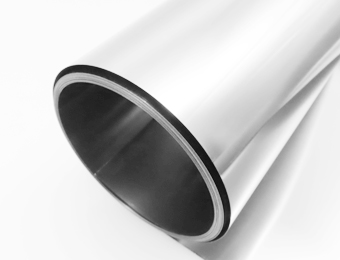
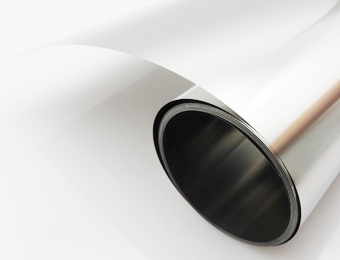
Niobium foil has important applications across advanced technological fields due to its unique combination of properties. In deep drawing applications for capacitor manufacturing, high-purity niobium foil can be used to produce niobium cups and other formed components for specialized electronic and capacitor applications, offering excellent formability. The achievable springback and thickness tolerance depend on the niobium grade, foil thickness, forming process, and customer requirements. The material's outstanding ductility allows for complex deep drawn geometries in electronic components while ensuring structural integrity.
For superconducting radio frequency (SRF) cavity production, ultra-high purity (99.99%+) niobium foil and niobium sheet are used to manufacture superconducting RF cavities for particle accelerators and other cryogenic applications. The material's high residual resistivity ratio (RRR), when supplied as RRR-grade high-purity niobium, and Meissner effect at cryogenic temperatures (critical temperature Tc = 9.2K) make it suitable for superconducting RF and specialized research applications. NbTi alloy wire is more commonly used for superconducting magnet windings, including MRI magnet systems. Recent advances in high-Q factor SRF cavity fabrication have further increased demand for high-purity niobium with controlled interstitial content and grain structure.
In physical vapor deposition (PVD) systems, high-purity niobium and niobium sputtering targets are used as materials for thin-film deposition applications. Its high melting point (2468°C) and low vapor pressure under appropriate vacuum conditions make niobium suitable for semiconductor, optical coating, and other thin-film deposition applications. Niobium thin films can be deposited on different substrates to provide specific electrical, optical, or protective properties, depending on the deposition process and film structure.
The aerospace sector utilizes niobium and niobium alloys in selected high-temperature aerospace applications. The material's specific strength at elevated temperatures and high melting point make niobium alloys such as C103 suitable for selected high-temperature components. Because pure niobium has limited oxidation resistance at elevated temperatures, protective coatings or controlled atmospheres may be required in high-temperature environments. Niobium alloys can therefore be considered for demanding aerospace applications where high-temperature mechanical properties and material stability are required.
Medical applications benefit from niobium foil's good biocompatibility and corrosion resistance. Specific medical applications depend on the applicable material grade, product specifications, and regulatory requirements. Niobium can be considered for selected implant-related and medical-device applications. Recent developments in porous niobium and additively manufactured niobium structures have opened new possibilities for specialized biomedical and osseointegration applications.
The jewelry industry has adopted niobium for its ability to be anodized and produce a range of vibrant colors without conventional plating or dyes. Advanced anodizing techniques can produce precise color effects on niobium jewelry, foil, and sheet products, enabling unique designer creations. The material's good biocompatibility and corrosion resistance make niobium suitable for certain jewelry and body-jewelry applications, including earrings, necklaces, bracelets, and other specialized products.
For technical specifications or application consultation, ourv materials engineering team provides comprehensive support to help select the optimal niobium foil or niobium strip solution for your specific requirements, whether for large-scale industrial deployment or precision research applications.