
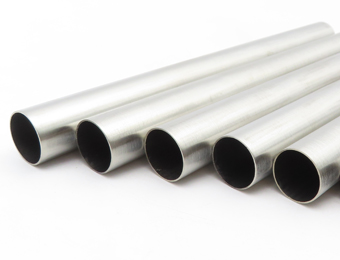
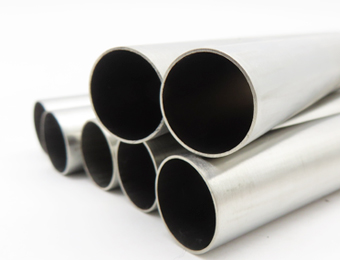
Niobium Tube & Pipe

Your global supplier for materials

Home Products Niobium Pure Niobium Niobium Tube & Pipe

Niobium Tube & Pipe (Nb Tube & Pipe)

Fortu Tech is an ISO Certified Corporation located in China and specializes in manufacturing Pure Niobium Tube & Pipe. We have more than 20 years of production experience. Our products are Conflict Free material.

Fortu Tech can customize the Pure Niobium Tube & Pipe according to your demand. Welcome to contact us if you have any questions or requirements.
Niobium Tube & Pipe of us meets the standard ASTM B 394 R04200 and ASTM B 394 R04210.

What is Niobium Tube & Pipe?

The Cas No. of Nb pipe is 7440-03-1.
Niobium tube has excellent physical and chemical properties. In terms of physical properties, the density of niobium tube is about 8.57 g/cm3. The melting point of Nb pipe is as high as 2468 ℃, and Cb pipe has good strength and ductility. Niobium tubing can still maintain stable mechanical properties under high temperature environment.

In addition, niobium tubings exhibit extremely low resistance and high critical magnetic field in the superconducting state, which is suitable for use in superconducting materials.

In terms of chemical properties, niobium tube has a strong affinity for oxygen and nitrogen, and it is easy to react with these elements at high temperatures. Niobium tubes have good corrosion resistance to a variety of acids, such as sulfuric and hydrochloric acid, but are more vulnerable to hydrofluoric acid.

The Columbium tube forms a dense oxide film in the air, which enhances its corrosion resistance. The excellent chemical stability and biocompatibility of niobium tube make it widely used in many fields such as medical treatment, chemical industry and energy.

Chemical Requirements of Niobium Tube & Pipe

ASTM B394 R04200 Chemical Requirements Niobium Tube & Pipe
Element % C N O H Zr Ta Fe Si W Ni Mo Hf Ti B Al Be Cr Co
Content Maximum % 0.01 0.01 0.015 0.0015 0.02 0.1 0.005 0.005 0.03 0.005 0.01 0.02 0.02 2 ppm 0.002 0.005 0.002 0.002
ASTM B394 R04210 Chemical Requirements Niobium Tube & Pipe
Element % C N O H Zr Ta Fe Si W Ni Mo Hf Ti Al
Content Maximum % 0.01 0.01 0.025 0.0015 0.02 0.3 0.01 0.005 0.05 0.005 0.02 0.02 0.03 0.005
The specification of ASTM B394
ASTM B 394 UNS R04200 Type 1 Reactor grade unalloyed niobium tube and niobium pipe
ASTM B 394 UNS R04210 Type 2 Commercial grade unalloyed niobium tube and niobium pipe
ASTM B 394 UNS R04251 Type 3 Reactor grade niobium alloy containing 1 % zirconium, Nb1Zr tube and Nb1Zr pipe
ASTM B 394 UNS R04261 Type 4 Commercial grade niobium alloy containing 1 % zirconium, Nb1Zr tube and Nb1Zr pipe
ASTM B 394 UNS R04220 Type 5 RRR grade pure niobium, RRR Nb tube and RRR Nb pipe

If you have inquiry or want to discuss your design with us, please write email to us.
We will reply your email within 24 hours.

Fortu Tech is a China-based manufacturer specializing in niobium, tantalum, molybdenum, titanium and zirconium metals and alloys. We supply high-purity metals, refractory metal alloys and custom-made products including foil, sheet, plate, tube, wire, rod, target and ingot for aerospace, semiconductor, medical, superconductivity and other advanced applications.

Commonly Ordered Sizes – Niobium Tube

Regular Niobium Tube
Outer Diameter (mm) 6 7 10 9.525 12.7 14 15.8 16.7 19 19.05 21 25 27 30 36 63 307
Outer Diameter (inch) 0.236 0.276 0.394 0.375 0.5 0.551 0.622 0.657 0.748 0.75 0.827 0.984 1.063 1.181 1.417 2.48 12.087
Inner Diameter (mm) 5 5.6 8 6.985 11.938 10 15 15.7 16 18.288 15 21 25 24 35 61 208
Inner Diameter (inch) 0.197 0.22 0.315 0.275 0.47 0.394 0.591 0.618 0.63 0.72 0.591 0.827 0.984 0.945 1.378 2.402 8.189
Wall Thickness (mm) 0.5 0.7 1 1.27 0.381 2 0.4 1 1.5 0.381 3 2 1 3 0.5 1 49.5
Wall Thickness (inch) 0.02 0.028 0.039 0.05 0.015 0.079 0.016 0.039 0.059 0.015 0.118 0.079 0.039 0.118 0.02 0.039 1.949
Length (mm) 1000 2100 100 800 3048 2200 950 900 3000 1700 2000 1000 750 1000 2900 2200 500
Length (inch) 39.37 82.677 3.937 31.496 120 86.614 37.402 35.433 118.11 66.929 78.74 39.37 29.528 39.37 114.173 86.614 19.685
Custom sizes are available upon request.

Mechanical Properties of Niobium Tube & Pipe

Annealed Condition (90% Minimum Recrystallized)

Mechanical Properties of Nb Tube & Pipe ASTM B394
Ultimate Tensile Strength Yield Strength Elongation
PSI 18 000 min, psi 10 500 min, psi 25%
Mpa 125 min, Mpa 73 min, Mpa 25%

Physical property of Nb Tube & Pipe

Cas No. of Nb 7440-3-1
EINECS No.of Nb 231-113-5
Element class of Nb Transition metal element
Density of Nb 8570kg/m3;8.57g/cm3
Melting Point of Nb 2468 ℃
Boiling Point of Nb 4742 ℃
Electronegativity of Nb 1.6
Atomic radius of Nb 146pm
Thermal Conductivity of Nb (300 K) 53.7 W·m−1K−1
Electrical Resistivityof Nb (0 °C) 152 nΩ·m

Niobium Tube and Pipe Comparison

Niobium tubes and pipes are available in different material grades, manufacturing methods, dimensions, and product conditions. The appropriate niobium tubing depends on the required chemical composition, mechanical properties, corrosion resistance, operating temperature, dimensions, and application. Fortu Tech supplies pure niobium tube, niobium pipe, and Nb-1Zr tubing according to applicable ASTM specifications and customer requirements.

Niobium Tube

Niobium tube is commonly selected for applications requiring a hollow cylindrical geometry, precise dimensions, corrosion resistance, or specialized material properties. Fortu Tech can supply niobium tube in customized outside diameters, inside diameters, wall thicknesses, lengths, grades, and surface conditions according to customer specifications.

Niobium Pipe

Niobium pipe is typically supplied for applications requiring larger dimensions or specific piping configurations. The product can be manufactured according to specified outside diameter, inside diameter, wall thickness, length, material grade, and applicable ASTM requirements. Fortu Tech supplies niobium pipe according to customer drawings, technical specifications, and application requirements.

01

Niobium Tube vs. Niobium Pipe

The terms niobium tube and niobium pipe are often used interchangeably in commercial searches, although the exact product designation can depend on dimensions, application, and customer specifications. Niobium tubing can be supplied with customized outside diameter, inside diameter, wall thickness, and length. For specialized applications, customers should specify the required dimensions and applicable material standard when requesting a quotation.

02

R04200 vs. R04210 Niobium Tube

R04200 and R04210 are both unalloyed niobium grades covered by ASTM B394. R04200 is classified as reactor-grade unalloyed niobium, while R04210 is commercial-grade unalloyed niobium. The two grades have different specified limits for certain impurities and alloying elements. The appropriate grade should therefore be selected according to the required chemical composition, processing requirements, and application.

03

Pure Niobium Tube vs. Nb‑1Zr Tube

Pure niobium tube contains unalloyed niobium, while Nb-1Zr tube contains approximately 1% zirconium as an alloying element. Pure niobium can be selected when high ductility, corrosion resistance, and the properties of unalloyed niobium are required. Nb-1Zr tubing can be considered when the application requires the properties of a niobium-zirconium alloy. ASTM B394 identifies R04251 Type 3 and R04261 Type 4 as niobium alloys containing 1% zirconium.

04

Seamless vs. Welded Niobium Tube

Seamless and welded niobium tubes are both covered by ASTM B394. The appropriate manufacturing method depends on the required dimensions, material grade, application, and customer specifications. Seamless tubing may be preferred for certain demanding applications, while welded tubing can be suitable for applications where the required dimensions and manufacturing requirements can be achieved. ASTM B394 covers both seamless and welded niobium and niobium alloy tubes.

05

Niobium Tube vs. Niobium Sheet

Niobium tube is selected when a hollow cylindrical geometry is required, while niobium sheet and plate are used for flat components and fabricated parts. Tube selection is generally based on outside diameter, inside diameter, wall thickness, and length, whereas sheet and plate are typically specified by thickness, width, and length. Fortu Tech supplies both niobium tubing and sheet products for different fabrication requirements.

06

Pure Niobium Tube vs. High‑Purity Niobium Tube

Pure niobium tube refers to unalloyed niobium tubing supplied to a specified material grade and chemical composition. High-purity niobium tube is selected when tighter impurity control is required for specialized research, electronic, superconducting, or cryogenic applications. The required purity and material specifications should be defined according to the intended application and performance requirements.

07

Niobium Tube vs. Tantalum Tube

Both niobium tube and tantalum tube are refractory-metal products with high melting points and excellent corrosion resistance. Niobium offers a lower density than tantalum and has useful superconducting properties at cryogenic temperatures, while tantalum is particularly well known for its exceptional corrosion resistance in many aggressive chemical environments. The appropriate material depends on the required corrosion resistance, density, temperature, mechanical properties, and application conditions.

How to Choose the Right Niobium Tube?

The appropriate niobium tube depends on material grade, chemical composition, outside diameter, inside diameter, wall thickness, length, manufacturing method, surface condition, tolerance, operating temperature, and chemical environment. Fortu Tech can supply ASTM B394 niobium tube in R04200 and R04210 grades, as well as Nb-1Zr tubing, and can manufacture customized dimensions according to customer drawings and technical specifications.

Application → Grade & Purity → → Dimensions → Tube / Pipe

Fortu Tech can review customer drawings and technical specifications to provide suitable niobium tube and pipe according to the required grade, dimensions, manufacturing method, material condition, and application requirements.

Niobium Tubes for Advanced Applications

Niobium Tubes are used in high-performance applications in superconductivity, Aerospace, Medical, chemical processing, and energy-related industries. Niobium tubes (also known as Nb tubes, Cb tubes, or columbium tubes) are valued for their excellent corrosion resistance, high melting point, ductility, and specialized superconducting properties at cryogenic temperatures.

These niobium pipes and tubes can be used in selected advanced applications ranging from scientific research and chemical processing to aerospace and specialized medical technologies.

Superconductivity

In superconductivity applications, high-purity niobium is widely used for superconducting radio-frequency (SRF) cavities and other cryogenic research equipment because pure niobium becomes superconducting below its critical temperature of approximately 9.2 K. High-purity niobium with a high Residual Resistivity Ratio (RRR) is particularly important for SRF cavity applications and particle accelerator technology.

NbTi alloy, rather than pure niobium, is more commonly used for superconducting magnet wires and cables, including applications in MRI systems and other superconducting magnet systems. Niobium-based superconducting materials are also relevant to particle accelerators, nuclear magnetic resonance research, and other advanced cryogenic technologies.

Aerospace

The aerospace industry uses niobium and niobium alloys for selected high-temperature applications because of their high melting points, relatively low density, and useful high-temperature mechanical properties. Nb-1Zr and other niobium alloys can be supplied in tube and other product forms for specialized high-temperature applications, depending on the required grade, temperature, environment, and mechanical properties.

Because pure niobium and niobium alloys can oxidize rapidly at elevated temperatures in air, protective coatings, controlled atmospheres, or vacuum conditions may be required for certain high-temperature applications.

Chemical Processing

For chemical processing, niobium tubes and pipes provide excellent corrosion resistance in many aggressive chemical environments. Niobium tubing can be considered for selected applications involving acids and other corrosive media, depending on the chemical concentration, temperature, and operating conditions.

Niobium tubes can be manufactured as seamless or welded products according to applicable specifications such as ASTM B394, with customized dimensions available for specialized chemical-processing applications.

Medical

In the medical field, niobium is recognized for its good biocompatibility and corrosion resistance, making it of interest for selected biomedical and medical-device applications. The specific use of niobium tubing in medical devices depends on the material grade, product specification, manufacturing process, and applicable regulatory requirements.

Niobium is also used in certain jewelry and body-jewelry applications because of its biocompatibility and ability to be anodized to produce a range of colors. These applications are distinct from regulated medical-device applications.

Energy

The energy sector can use niobium and niobium alloys in selected high-temperature, chemical-processing, and specialized energy-related applications. Niobium's corrosion resistance, high melting point, and alloying capability make it suitable for specific demanding environments.

The selection of niobium tubing for energy applications depends on operating temperature, chemical environment, pressure, radiation exposure, and required mechanical properties. Specific applications should therefore be evaluated according to the actual service conditions rather than assuming that all niobium tubes are suitable for nuclear or oil-and-gas service.

Niobium Tube Specifications and Custom Sizes

Fortu Tech supplies niobium tubes and pipes in customized dimensions for specialized applications. Products can be manufactured in seamless or welded forms, with material grades including ASTM B394 R04200 and R04210, as well as selected niobium alloys according to customer requirements.

High-purity niobium tubing is available for specialized applications, with purity, diameter, wall thickness, length, surface condition, tolerance, and other technical requirements customizable according to customer drawings and specifications.

With its combination of corrosion resistance, high melting point, ductility, high-temperature properties, and superconducting behavior at cryogenic temperatures, niobium tubing continues to support specialized applications across scientific research, chemical processing, aerospace, medical, and other advanced industries.

For technical specifications or application consultation, our materials engineering team provides comprehensive support to help select the optimal niobium tube or niobium pipe solution for your specific requirements, whether for large-scale industrial deployment or precision research applications.

Why Choose Fortu Tech for Niobium Tube?

Fortu Tech specializes in manufacturing pure niobium tube and niobium pipe for specialized applications in aerospace, chemical processing, superconductivity, medical technology, research, and other advanced industries. With more than 20 years of manufacturing experience, we provide niobium tubing according to ASTM B394, customer drawings, technical specifications, and application requirements.

Our niobium tube capabilities include:
Pure niobium tube and pipe according to applicable ASTM B394 requirements
ASTM B394 R04200 and R04210 niobium tube
Nb-1Zr tube and pipe, including R04251 and R04261 grades
High-purity niobium tubing for specialized research and cryogenic applications
Seamless and welded niobium tubes according to applicable specifications
Custom outside diameter, inside diameter, wall thickness, and length
Customized tolerances, surface conditions, and other technical requirements
Niobium tubing manufactured according to customer drawings and specifications
Material solutions for chemical processing, aerospace, superconductivity, medical, and research applications
Customized Niobium Tube Manufacturing

Fortu Tech can manufacture custom niobium tube and pipe according to your required material grade, outside diameter, inside diameter, wall thickness, length, tolerance, surface condition, and quantity. Whether you require standard ASTM B394 niobium tube, R04200 or R04210 pure niobium tubing, or Nb-1Zr tube, our technical team can evaluate your specifications and provide a suitable material solution for your application.

Frequently Asked Questions

Niobium tube is a tubular product manufactured from pure niobium or niobium alloys. Niobium tubing offers good corrosion resistance, ductility, a high melting point, and useful mechanical properties. It is available for specialized applications in chemical processing, aerospace, superconductivity, research, and other advanced industries.

ASTM B394 is the standard specification for wrought niobium and niobium alloy seamless and welded tubes. It covers niobium grades including R04200, R04210, R04251, and R04261. Fortu Tech supplies niobium tube and pipe according to applicable ASTM B394 requirements.

R04200 and R04210 are both unalloyed niobium grades covered by ASTM B394. R04200 is classified as reactor-grade unalloyed niobium, while R04210 is commercial-grade unalloyed niobium. The grades have different specified chemical composition limits, so the appropriate grade depends on the required material composition and application.

Yes. Fortu Tech can supply niobium-1% zirconium (Nb-1Zr) tube and pipe for applications requiring a niobium-zirconium alloy. ASTM B394 includes R04251 Type 3 and R04261 Type 4 for niobium alloy containing 1% zirconium.

Fortu Tech can discuss high-purity and RRR-grade niobium tubing for specialized applications according to customer requirements. RRR-grade niobium is particularly relevant to applications where high material purity and low electrical resistivity at cryogenic temperatures are important, such as specialized superconducting and research applications.

Fortu Tech supplies niobium tubes in a range of outside diameters, inside diameters, wall thicknesses, and lengths. Commonly ordered sizes include OD from approximately 6 mm to 307 mm, with different wall thicknesses and lengths available. Custom niobium tube sizes are also available according to customer drawings and technical specifications.

Yes. Fortu Tech can manufacture custom niobium tube and pipe according to customer requirements. Customized specifications can include material grade, outside diameter, inside diameter, wall thickness, length, tolerance, surface condition, and quantity.

Yes. ASTM B394 covers both seamless and welded niobium and niobium alloy tubes. The appropriate manufacturing method depends on the required dimensions, material grade, application, and customer specifications.

Niobium tubes can be used in selected applications involving chemical processing, aerospace, superconductivity, cryogenic research, medical technology, and other specialized industrial applications. The appropriate niobium grade and tube configuration depend on the operating temperature, chemical environment, mechanical requirements, and other service conditions.

Niobium has a high melting point of approximately 2468°C and useful mechanical properties at elevated temperatures. Niobium tubes can therefore be considered for selected high-temperature applications. However, pure niobium can react with oxygen at elevated temperatures, so vacuum, controlled atmospheres, or protective coatings may be required depending on the operating environment.

The CAS Registry Number for elemental niobium is 7440-03-1. The CAS number identifies the niobium material itself rather than the specific tube or pipe product form.

Pure niobium becomes superconducting below its critical temperature of approximately 9.2 K. High-purity niobium is therefore used in selected superconducting and cryogenic applications, particularly superconducting radio-frequency (SRF) cavities and particle accelerator technology. NbTi, rather than pure niobium, is more commonly used for superconducting magnet wires and cables such as those used in MRI systems.

Need a Custom Niobium Solution?

Contact Fortu Tech with your specifications and application requirements.

Request a Quote

GET IN TOUCH WITH US

CONTACT US

Add: 399 Chunhe Road, Baoshan District, Shanghai, China, 200941
Tel: +86 21 56656030

Email: info@fortu-tech.com

FOLLOW US

JOIN US