
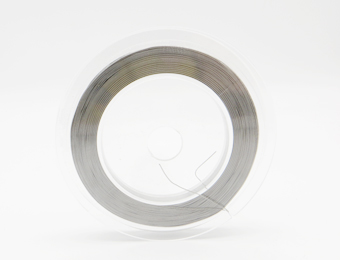
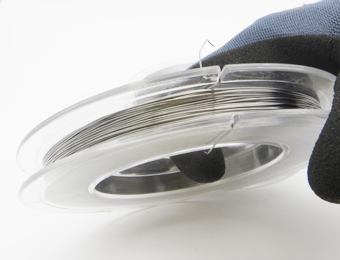
Niobium Wire

Your global supplier for materials

Niobium Wire (Nb Wire)

Fortu Tech is an ISO Certified Corporation located in China and specializes in manufacturing Pure Niobium Wire. We have more than 20 years of pwireuction experience. Our pwireucts are Conflict Free material.

Common specifications
Diameter inch 0.01 0.02 0.03 0.04 0.05 0.08 0.1 0.125
Diameter mm 0.254 0.508 0.762 1.016 1.27 2.032 2.54 3.175

Fortu Tech can customize the Pure Nb wire according to your demand. Welcome to contact us if you have any questions or requirements.
Niobium wire of us meets the standard ASTM B 392 R04200 and ASTM B 392 R04210.

What is Niobium Wire?

The Cas No. of Nb wire is 7440-03-1.
Pure Niobium Wire are types of thin wires made of niobium metal. Niobium Wire 99.95% has excellent corrosion resistance, electrical conductivity and high melting point. Nb Wire is widely used in electronic components, superconducting materials and aerospace.

Columbium wire is especially used in manufacturing equipment that operates in high temperature environments. Because of the good mechanical properties and chemical stability of Cb wire, niobium wire also has important applications in the medical device and nuclear industry.

Chemical Requirements of Niobium Wire

ASTM B392 R04200 Chemical Requirements Niobium Wire
Element % C N O H Zr Ta Fe Si W Ni Mo Hf Ti B Al Be Cr Co
Content Maximum % 0.01 0.01 0.015 0.0015 0.02 0.1 0.005 0.005 0.03 0.005 0.01 0.02 0.02 2 ppm 0.002 0.005 0.002 0.002
ASTM B392 R04210 Chemical Requirements Niobium Wire
Element % C N O H Zr Ta Fe Si W Ni Mo Hf Ti Al
Content Maximum % 0.01 0.01 0.025 0.0015 0.02 0.3 0.01 0.005 0.05 0.005 0.02 0.02 0.03 0.005
The specification of ASTM B392
ASTM B 392 UNS R04200 Type 1 Reactor grade unalloyed niobium wire
ASTM B 392 UNS R04210 Type 2 Commercial grade unalloyed niobium wire
ASTM B 392 UNS R04251 Type 3 Reactor grade niobium alloy containing 1 % zirconium, Nb1Zr wire
ASTM B 392 UNS R04261 Type 4 Commercial grade niobium alloy containing 1 % zirconium, Nb1Zr wire
ASTM B 392 UNS R04220 Type 5 RRR grade pure niobium, RRR Nb wire

If you have inquiry or want to discuss your design with us, please write email to us.
We will reply your email within 24 hours.

Fortu Tech is a China-based manufacturer specializing in niobium, tantalum, molybdenum, titanium and zirconium metals and alloys. We supply high-purity metals, refractory metal alloys and custom-made products including foil, sheet, plate, tube, wire, rod, target and ingot for aerospace, semiconductor, medical, superconductivity and other advanced applications.

Commonly Ordered Sizes – Niobium Wire

Regular Niobium Wire Size
Product Niobium Wire
Diameter(mm) 0.24 0.50 0.762 1.20 1.524 1.578 2.282 3.20
Diameter (inch) 0.0094 0.0197 0.03 0.0472 0.06 0.0621 0.0898 0.126
Custom sizes are available upon request.

Mechanical Properties of Niobium Wire

Annealed Condition (90% Minimum Recrystallized)

Mechanical Properties of Niobium Wire ASTM B392
Diameter Ultimate Tensile Strength Yield Strength Elongation
0.020" to 0.124" 18 000 min, psi 20%
0.51mm to 3.145mm 125 min, Mpa 15%

Physical property of Nb Wire

Cas No. of Nb 7440-3-1
EINECS No.of Nb 231-113-5
Element class of Nb Transition metal element
Density of Nb 8570kg/m3;8.57g/cm3
Melting Point of Nb 2468 ℃
Boiling Point of Nb 4742 ℃
Electronegativity of Nb 1.6
Atomic radius of Nb 146pm
Thermal Conductivity of Nb (300 K) 53.7 W·m−1K−1
Electrical Resistivityof Nb (0 °C) 152 nΩ·m

Niobium Wire Comparison

Niobium wire is available in different grades, purity levels, diameters, and alloy compositions. The appropriate niobium wire depends on the required electrical properties, mechanical properties, operating temperature, superconducting requirements, corrosion resistance, and application. Fortu Tech supplies pure niobium wire and niobium alloy wire according to applicable ASTM specifications and customer requirements.

01

Pure Niobium Wire vs. NbTi Wire

Pure niobium wire and niobium‑titanium (NbTi) wire have different compositions and applications. Pure niobium wire is an unalloyed niobium material and can be selected for applications requiring high purity, corrosion resistance, ductility, and the properties of niobium. NbTi wire is a niobium‑titanium alloy primarily used for superconducting magnet applications, including MRI systems and other superconducting equipment.

02

R04200 vs. R04210 Niobium Wire

R04200 and R04210 are both unalloyed niobium wire grades covered by ASTM B392. R04200 is classified as reactor‑grade unalloyed niobium, while R04210 is classified as commercial‑grade unalloyed niobium. The two grades have different specified impurity limits, so the appropriate grade should be selected according to the required chemical composition and application.

03

Pure Niobium Wire vs. Nb‑1Zr Wire

Pure niobium wire contains unalloyed niobium, while Nb‑1Zr wire contains approximately 1% zirconium as an alloying element. Pure niobium can be selected when the properties of unalloyed niobium are required, while Nb‑1Zr wire can be considered when the application requires the properties of a niobium‑zirconium alloy. ASTM B392 includes R04251 reactor‑grade Nb‑1Zr and R04261 commercial‑grade Nb‑1Zr wire.

04

Standard Niobium Wire vs. RRR Niobium Wire

Standard pure niobium wire and RRR niobium wire are both based on niobium, but they are intended for different material requirements. Standard niobium wire is commonly selected for general industrial and specialized applications, while RRR‑grade niobium is used when high material purity and low electrical resistivity at cryogenic temperatures are important. RRR requirements should be specified according to the intended superconducting or research application.

05

Niobium Wire vs. Tantalum Wire

Niobium wire and tantalum wire are both refractory metal wires with high melting points and good corrosion resistance. Niobium wire offers a lower density and is widely considered for superconducting, aerospace, electronics, and specialized research applications. Tantalum wire provides exceptional corrosion resistance and is commonly used in chemical processing, medical, electronics, and other demanding environments. The appropriate material depends on the operating temperature, chemical environment, electrical requirements, mechanical properties, and application.

How to Choose the Right Niobium Wire?

The appropriate niobium wire depends on material grade, purity level, diameter, length, surface condition, mechanical properties, operating temperature, electrical requirements, and application environment. Fortu Tech can supply ASTM B392 niobium wire in R04200 and R04210 grades, as well as Nb‑1Zr wire and high‑purity RRR‑grade niobium wire according to customer specifications.

Application → Grade & Purity → Diameter & Size → Wire Type

Fortu Tech can review customer drawings and technical specifications to provide suitable niobium wire according to the required grade, diameter, material condition, mechanical requirements, and application needs.

Niobium Wire for Advanced Applications

High‑purity niobium wire provides material solutions for demanding technological applications due to its unique combination of superconducting properties, high‑temperature resistance, corrosion resistance, and biocompatibility.

Pure niobium wire represents a critical material solution for selected superconducting applications. High‑purity RRR‑grade niobium wire with a high Residual Resistivity Ratio (RRR) is used in specialized superconducting and research applications requiring excellent electrical performance at cryogenic temperatures.

NbTi alloy wire is widely used in MRI system magnets and other superconducting magnet applications. Niobium and niobium alloys are also used in particle accelerator systems and selected nuclear fusion research applications where superconducting and high‑temperature properties are required.

In high‑temperature industrial environments, niobium wire can be used in selected high‑temperature applications under controlled atmospheres or vacuum conditions. Its high melting point and material stability make it suitable for specialized high‑temperature components, laboratory equipment, and other demanding applications.

The Nb wire's stability in ultra‑high vacuum (UHV) conditions further qualifies it for specialized laboratory equipment and thin‑film deposition‑related applications where contamination risks must be minimized.

The jewelry industry benefits from niobium wire's unique anodization capabilities, which produce vibrant, permanent colors without using plating or dyes.

This characteristic, combined with the Nb wire's inherent biocompatibility and corrosion resistance, makes niobium suitable for certain body jewelry applications, particularly for consumers with metal sensitivities.

Fashion applications range from delicate niobium necklaces and earrings to statement bracelets, offering good durability and skin compatibility.

Niobium wire (99.95%‑99.99% purity) can be considered for selected metal additive manufacturing applications, particularly wire‑based processes such as Directed Energy Deposition (DED).

With its high melting point (2,468°C), excellent ductility, and useful mechanical properties, niobium wire can be considered for specialized aerospace components, high‑temperature components, and other advanced metal fabrication applications.

Wire‑based additive manufacturing processes require appropriate wire composition, diameter, surface condition, and oxygen content according to the equipment and application requirements.

The Nb wire's compatibility with wire‑based additive manufacturing technologies allows for the fabrication of customized niobium and niobium alloy components.

LPBF and conventional powder‑bed fusion processes generally use metal powder rather than wire, while DED can use wire as a feedstock. Appropriate post‑processing, including heat treatment or hot isostatic pressing (HIP) where applicable, can be used to optimize the properties of additively manufactured components.

Available in diameters from 0.05mm to 5mm, niobium wire can be supplied according to applicable ASTM B392 requirements, with custom purity options ranging from standard 99.95% to high‑purity and RRR‑grade material according to specific technical requirements.

Whether you require specialized niobium wire for superconducting and research applications or anodized niobium wire for jewelry and fashion applications, our technical team can provide material solutions tailored to your exact specifications and performance requirements.

For technical specifications or application consultation, our materials engineering team provides comprehensive support to help select the appropriate niobium wire solution for your specific requirements, whether for large‑scale industrial deployment or precision research applications.

Why Choose Fortu Tech for Niobium Wire?

Fortu Tech specializes in niobium wire and other refractory metal products, including tantalum, molybdenum, titanium and their alloys. We manufacture and supply pure niobium wire and niobium alloy wire for aerospace, electronics, superconducting, medical, high‑temperature, and other specialized applications.

Our capabilities include
Pure niobium wire according to ASTM B392
Niobium wire R04200 and R04210
RRR niobium wire for specialized superconducting and research applications
Nb‑1Zr wire and other niobium alloy wire
Fine niobium wire and customized diameters
Custom niobium wire according to customer drawings and technical specifications
Niobium wire for superconducting, aerospace, medical, electronic, and high‑temperature applications
Custom‑made niobium alloy products in different forms and dimensions

Frequently Asked Questions

Niobium wire is a wire product manufactured from pure niobium or niobium alloys. Pure niobium wire offers a combination of high melting point, corrosion resistance, ductility, and electrical properties. Niobium wire is used in specialized applications including aerospace, electronics, superconductivity, medical devices, and research.

Niobium wire is commonly supplied according to ASTM B392, which covers niobium and niobium alloy bar, rod, and wire. Fortu Tech supplies pure niobium wire according to ASTM B392, including UNS R04200 and R04210 grades.

UNS R04200 and UNS R04210 are unalloyed niobium grades covered by ASTM B392. R04200 is classified as reactor‑grade unalloyed niobium, while R04210 is classified as commercial‑grade unalloyed niobium. The appropriate grade depends on the required chemical composition and application.

Yes. Fortu Tech can supply RRR‑grade pure niobium wire for specialized superconducting and research applications. RRR requirements should be specified according to the intended application, as high‑purity RRR niobium is different from standard commercial‑purity niobium wire.

Fortu Tech supplies niobium wire in different purity levels according to customer requirements. Standard pure niobium wire can be supplied in grades such as R04200 and R04210, while high‑purity and RRR‑grade niobium wire can be discussed for specialized superconducting and research applications.

Fortu Tech supplies niobium wire in a range of diameters, including commonly ordered sizes from approximately 0.24 mm to 3.20 mm, with custom sizes available upon request. Wire diameter, length, surface condition, and other requirements can be customized according to customer drawings and specifications.

Niobium wire is used in a range of specialized applications, including superconductivity, aerospace, electronics, medical devices, high‑temperature applications, research equipment, and jewelry. The appropriate niobium grade and purity depend on the operating environment and required material properties.

Yes. High‑purity niobium is used in selected superconducting and superconducting RF applications. NbTi alloy wire is widely used for superconducting magnets, including applications such as MRI systems. For specialized pure niobium applications, high‑purity and RRR‑grade material may be required.

Yes. Fortu Tech can manufacture custom niobium wire according to customer requirements. Customized specifications may include material grade, purity, diameter, length, surface condition, mechanical requirements, and applicable ASTM standards.

Need a Custom Niobium Solution?

Contact Fortu Tech with your specifications and application requirements.

Request a Quote

GET IN TOUCH WITH US

CONTACT US

Add: 399 Chunhe Road, Baoshan District, Shanghai, China, 200941
Tel: +86 21 56656030

Email: info@fortu-tech.com

FOLLOW US

JOIN US